

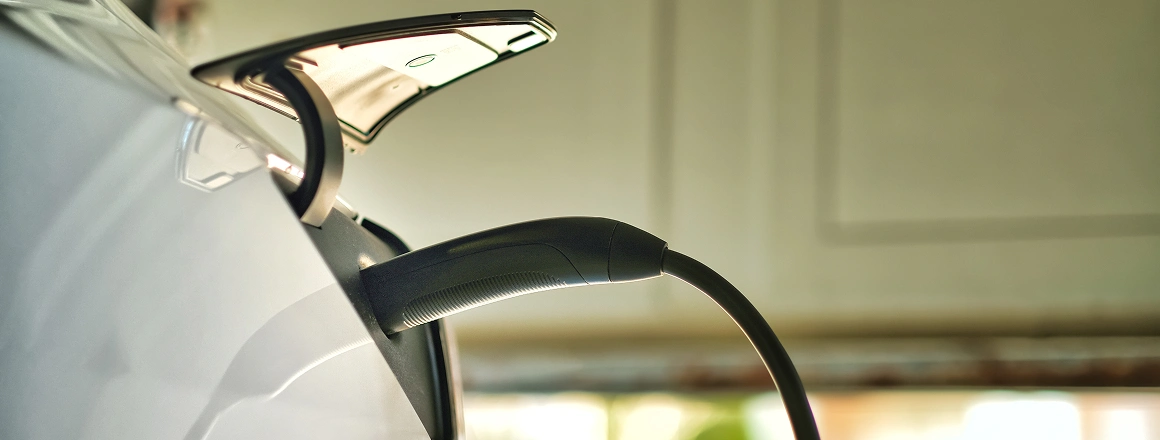
Installing a home electric vehicle (EV) charger is one of the most common electrical upgrades homeowners make today. As EV ownership grows, with national EV market share at approximately 6.5% in early 2026, understanding EV charger installation costs helps drivers plan smarter. The numbers vary widely depending on charger type, home electrical capacity, and local labor rates, but this guide breaks it all down with verified data.
What you’ll find below:
- National cost averages for EV charger installation in 2026
- A comparison of Level 1, Level 2, and DC fast charger costs and specs
- The factors that drive installation prices up or down
- Available utility rebates that reduce your out-of-pocket cost
- Long-term home vs. public charging cost data
EV Charger Installation Cost by Scenario (2026)
The table below shows cost benchmarks across the most common residential installation scenarios. Costs reflect equipment plus professional installation, based on published installer guidance, marketplace estimates, and industry sources. A permit cost will also range between: $36 – $130 for a city or state electrical inspection for the added circuit outlet.
| Scenario | Equipment Cost | Installation Cost | Estimated Total |
|---|---|---|---|
| Level 1 (standard 120V outlet) | $100–$200 | $700–$1,800 | $950-2300 |
| Level 2: charger near panel (charger Included) | $500–$700 | $1,200–$1,500 | $1,700–$1,800 |
| Level 2: longer wire run (>20 ft) | $500–$1,200 | $2500–$3,500 | $3500–$5500 |
| Level 2: detached garage or complex setup | $1200–$1800 | $2,800–$4000 | $4000-$6600 |
| Level 2: panel upgrade required | $3000–$4500 | $6000–$8000 | $10000–$12500 |
Installation cost ranges reflect industry marketplace data and installer guidance. Specific costs vary by region, electrician, and local labor rates.
Sources: Argonne National Laboratory (2026), U.S. Department of Transportation (2026), U.S. Department of Energy – Alternative Fuels Data Center (2026)
The national average for a complete Level 2 EV charger installation ranges from $800 to $3,000, with most homeowners spending approximately $1,700 to $2,000 for straightforward setups, according to Argonne National Laboratory. Electrical panel capacity remains the single biggest cost driver, particularly for homes built before 1990 that may have 100-amp service and require a panel upgrade costing $1,300 to $3,000 for a standard upgrade, with worst-case full-service replacements reaching $7,000 or more.
Level 1 vs. Level 2 EV Charger: Cost and Performance Comparison
Most homeowners install Level 2 chargers because they deliver practical daily charging speeds. Level 1 chargers are slower but cost less upfront. DC fast chargers are reserved for commercial or fleet applications at significantly higher price points.
| Charger Type | Voltage | Unit Cost | Typical Install Cost | Range Added Per Hour | Full Charge Time (BEV) |
|---|---|---|---|---|---|
| Level 1 | 120V AC | $0–$200 | $700–$1800 | 2–5 miles | 40–50 hours |
| Level 2 | 240V AC | $500–$800 | $1300–$3500 | 25–30 miles | 6–10 hours |
Sources: U.S. Department of Transportation – Charger Types and Speeds, Sunrun (2026), EnergySage (2026), NeoCharge (2026)
Level 1 chargers plug directly into a standard household outlet and require little to no professional installation. However, a full charge on a battery electric vehicle (BEV) can take more than 40 hours. For daily drivers, that’s not practical. Level 2 chargers require a dedicated 240V circuit and professional installation, but deliver approximately 25–30 miles of range per hour, enough to fully replenish most EV batteries overnight. According to Argonne National Laboratory, the average cost of a Level 2 home charger installation in the United States is approximately $1,800, including equipment and installation.
What Factors Drive EV Charger Installation Cost
Several variables can push the cost of an installation toward the low or high end of the range. A big factor determining investment cost is the existing electrical service size and capacity aligned with current electrical demand before adding an EV charger. Knowing these factors helps homeowners get more accurate quotes and avoid budget surprises.
| Cost Factor | Estimated Impact | Details |
|---|---|---|
| Charger distance from electrical panel | +$1200–$1800 | Each foot of additional wiring beyond 20 ft adds material and labor costs |
| Wiring through finished walls or obstacles | +$900–$3000 | Routing wire through drywall or around obstructions adds labor time |
| Panel capacity (100A service or less) | +$1,300–$3,000 | Homes with older 100A panels typically need an upgrade to support a 50–60A EV circuit; worst-case full replacements may exceed $7,000 |
| Outdoor or weatherproof installation | Variable: additional equipment cost of $300-500 | Exposed locations require weatherproof conduit and hardwired connections |
| Permits and inspections | $100–$300 | Required by code in most jurisdictions, including Minnesota |
| Electrician labor rate | $175–$350/hour | Rates vary by region, licensing level, and job complexity |
Sources: EnergySage (2026), NuwattEnergy (2026), HomeAdvisor (2026)
Electrical panel capacity is the single biggest cost driver in EV charger installation. Homes built before 1990 are most likely to have 100-amp service and may need a full panel upgrade before a dedicated EV circuit can be added.
State and Utility Rebates for EV Charger Installation in 2026
Several Minnesota utilities offer rebate programs for residential charger installations. These programs can help offset the upfront cost of equipment and installation.
| Program | Benefit | Who Qualifies | Expiration |
|---|---|---|---|
| Xcel Energy (MN) | Rebate varies; check program | Xcel Energy residential customers | Ongoing |
| Connexus Energy (MN) | Up to $500 per charger | Connexus customers | Ongoing |
| Dakota Electric (MN) | $500 | Dakota Electric customers | Ongoing |
| Wright-Hennepin Electric (MN) | $500 bill credit | W-H customers | Ongoing |
| City of Elk River (MN) | Up to $700 | Elk River utility customers | Check with city |
| People’s Energy Co-op (MN) | Up to $800 | Cooperative members | Ongoing |
Sources: Xcel Energy (2026), Connexus Energy (2026), Dakota Electric (2026), Wright-Hennepin Electric (2026), City of Elk River (2026), People’s Energy Co-op (2026)
Many Minnesota utility providers offer rebates to help reduce the cost of home EV charger installation. The amount varies by utility, but programs typically provide $500–$800 in rebates for qualifying residential customers. Contact your local utility provider to learn about current programs and eligibility requirements. For qualifying households, these rebates can reduce upfront installation costs by several hundred dollars.
Home Charging vs. Public Charging: Long-Term Cost Data
Installation cost is only part of the financial picture. The ongoing cost of charging at home is substantially lower than using public charging networks, and those savings compound over time.
| Metric | Level 2 Home Charging | Level 2 Public Charging | DC Fast (Public) |
|---|---|---|---|
| Average cost per kWh | $0.1883 | $0.30 | $0.55 |
| Cost per full charge (60 kWh battery) | $11.30 | $18.00 | $33.00 |
| Annual charging cost (12,000 miles, 3.3 mi/kWh) | $684 | $1,080 | $1,980 |
| Annual cost vs. gasoline (~$1,785/yr at $4.09/gal, 27.5 MPG) | Save ~$1,101 | Save ~$705 | Cost ~$195 more |
Sources: ElectricChoice (August 2026), Federal Highway Administration (2026), NeoCharge (2026)
Home charging consistently offers the lowest per-mile cost for EV drivers. At the national average electricity rate of 18.83¢/kWh (as of July 30, 2026), a full charge on a 60 kWh battery costs approximately $11.30 at home, compared to $18.00 at a public Level 2 station and $33.00 at a DC fast charger. Based on the average American driving 12,000 miles per year at typical EV efficiency of 3.3 miles per kWh and current gasoline prices averaging $4.09 per gallon (August 2026), a home-charging EV driver saves approximately $1,101 annually compared to a comparable gasoline vehicle (assuming 27.5 MPG fuel economy) and $705 compared to relying on public Level 2 stations. According to Argonne National Laboratory and the National Renewable Energy Laboratory, roughly 80% of EV charging happens at home, making residential charging infrastructure a critical investment for cost-conscious EV owners.
Important Context: 2026 EV Market Dynamics
The EV market in 2026 is experiencing significant shifts. Following the expiration of federal EV purchase tax credits in late 2025, EV sales declined sharply in the final months of 2025. National EV market share fell to approximately 5.8%–6% in early 2026, down from a peak of 7.5% in Q3 2025, according to Cox Automotive and Edmunds data. Minnesota also saw EV sales soften after federal purchase incentives ended, according to local reporting and state transportation data. However, rising gasoline prices (averaging $4.09 nationally and $3.94 in Minnesota as of August 2026) are renewing interest in electric vehicles. Hybrids continue to gain market share, with some consumers viewing them as a transitional technology while EV infrastructure and battery technology continue to improve.
Cold Weather Considerations for Minnesota: Minnesota’s cold climate presents a unique challenge for EV owners. According to a 2026 AAA study, EVs experience a 39% decrease in calculated driving range at 20°F compared to moderate temperatures (75°F). This range loss is primarily due to battery efficiency reduction and the energy required for cabin heating. However, newer EV models equipped with heat pumps—such as the Mustang Mach-E—can reduce this penalty significantly. According to the AAA study, models with heat pump technology and advanced thermal management showed range losses in the 20–25% range, compared to the ~39% study average or higher for models without heat pump technology. For Minnesota drivers, this means selecting a newer model with a heat pump can significantly improve winter performance and charging efficiency.
EV Charger Installation in Minneapolis: Schedule with EarlyBird
If you’re adding an EV to your household or planning ahead for a future purchase, installing a Level 2 charger at home is the most cost-effective charging solution available. EarlyBird Electric installs EV chargers throughout the Minneapolis area, with licensed electricians who assess your electrical panel, home electrical service capacity and home electrical demand, handle all permits and inspections, and complete the work safely and to code.
Schedule your EV charger installation with EarlyBird Electric to get upfront pricing from licensed residential electricians serving the Twin Cities.
Sources
Installation Costs & Pricing:
- Argonne National Laboratory. EV Charging Infrastructure. anl.gov (2026)
- U.S. Department of Transportation. Charger Types and Speeds. transportation.gov
State & Utility Rebate Programs:
- Xcel Energy. EV Charger Rebate Program. xcelenergy.com (2026)
- Connexus Energy. Charging Station Rebate. connexusenergy.com (2026)
- Dakota Electric. EV Charging Incentives. dakotaelectric.com (2026)
- Wright-Hennepin Electric. Charger Installation Rebate. whe.coop (2026)
- City of Elk River. EV Charging Station Rebate Program. elkrivermn.gov (2026)
- People’s Energy Co-op. EV Charger Rebate. peoplesenergy.coop (2026)
Electricity & Fuel Costs:
- ElectricChoice. Electricity Rates by State (August 2026). electricchoice.com (Updated July 30, 2026)
- AAA. Gas Prices (August 2026). gasprices.aaa.com
- Federal Highway Administration. Average Miles Driven Per Year. fhwa.dot.gov
- NeoCharge. How Much Does It Really Cost to Charge an EV at Home? (2026 Calculator). getneocharge.com (June 2026)
EV Market Data:
- Cox Automotive. Q1 2026 EV Sales Report. coxautoinc.com (2026)
- Edmunds. What Is the Percentage of Electric Cars in the U.S.? edmunds.com (April 2026)
- Minnesota Public Radio. Electric Vehicle Sales in Minnesota Are Losing Steam. mprnews.org (May 2026)
Charging Infrastructure & Cold Weather Performance:
- U.S. Department of Transportation. Charger Types and Speeds. transportation.gov
- National Renewable Energy Laboratory. EV Charging Behavior. nrel.gov
- Argonne National Laboratory. Refueling Infrastructure Tax Credit. anl.gov (2026)
- AAA. AAA Study Reveals Temperature Impacts on EV and Hybrid Efficiencies and Costs. newsroom.aaa.com (May 1, 2026)
- Inside Climate News. Improvements to Electric Vehicles Ease Concerns About Range Loss in Cold Climates. insideclimatenews.org (January 4, 2025)